Salento Rosato Wines Between History and New Styles
🌅 The Rediscovered Tradition: Salento Rosato Wines Between History and New Styles
Were it not for the global crisis, 2020 was set to be the golden year for Apulian rosés. **Salento**, with its charming fishing villages and blood-orange sunsets, is the protagonist of this renaissance, celebrated in trendy venues overlooking the Ionian Sea. Fortunately, the Salento rosé trend is not fading anytime soon: its roots lie in the history of Greek colonization and the winemaking challenges that shaped a unique style, now among the most sought-after globally.
—
📜 Historical Roots: Rosé out of Necessity
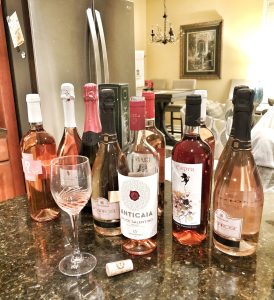 The rosé wine tradition in Salento is ancient, linked to the introduction of varieties like **Negroamaro, Nero di Troia, and Malvasia Nera**. Centuries ago, the real challenge on the hot coastal plains was **keeping the wine cool** and preventing rapid oxidation. In the absence of underground cellars carved into hillsides, the only solution was to produce wines that could be consumed immediately after harvest.
This necessity gave rise to a specific technique: **gentle pressing** and **short maceration periods**. This method remains the foundation for obtaining the classic Salento rosé wine today.
The Defeat of Primitivo and the Triumph of Rosé
For years, Apulian oenology was mistakenly associated almost exclusively with **full-bodied, muscular red wines** from overripe Primitivo grapes, often used as “blending wines” to fortify the lighter wines of Northern Italy or to satisfy demand from foreign markets like the US and UK.
However, the Salento farmer knows well that this style of red, while bringing notoriety, is actually a modern invention, quite foreign to the **traditional Apulian cuisine**, which is based on vegetables and seafood. **Rosé wine** is the true gastronomic expression of Puglia, drunk throughout the year, both in summer and winter.
—
🎨 The Color Quibble: Provençal Style vs. Old School
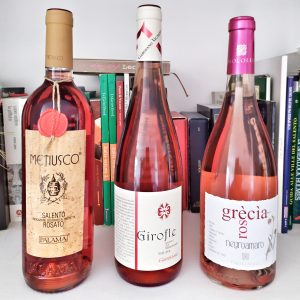 Currently, much of the Apulian rosé production has sought to follow the global success of **Provençal-style** wines: very light colours, gentle pressing, and intriguing aromas of fresh flowers and fruit. This trend, while lucrative, has led some producers to chase the salmon-pink colour typical of the French Riviera.
However, Salento is a rainbow of hues. A selection of the best local rosés reveals colours ranging from salmon pink all the way to the **deep coral pink** of the “old school.” Producers like Candido, with its historical coral-coloured “Le Pozzelle,” keep the 1970s tradition alive.
Rosato: “The Wine of One Night”
The great oenologist Severino Garofano once defined Salento rosé as “the wine of one night.” This refers to the traditional production method involving maceration for between **twelve and twenty-four hours**. This time is sufficient to extract not only ripe fruit scents but also the **tannins** and **polyphenols** that give the wine an extra touch of colour and greater structure. It is this honest, simplistic approach that allows the wines to maintain all their territorial characteristics over time.
—
💎 The Negroamaro Structure and Aging Potential
Rosés in Salento are typically produced from **Negroamaro** grapes, a variety with a robust structure and strong character. The resulting wines are a beautiful example of balance between freshness, **wild berries**, and a pleasant **maritime salinity**.
An often-overlooked aspect is their **aging capability**. Many Salento rosés, thanks to the tannic structure of Negroamaro, the intense flavor, and generous acidity, are capable of remaining excellent in the bottle for several years. Vintage rosé deserves much more attention than it receives.
Five Roses: The Emblem of Tradition
The historic **Leone de Castris** company embodies this long tradition: in 1943, they bottled and sold the **first rosé in Italy**. Their **”Five Roses,”** still produced today with nine parts Negroamaro and one part Malvasia Nera, is the emblem of Salento’s winemaking history and the ideal starting point for discovering the authenticity of this region.
Salento offers a large number of diverse, exceptional rosé wines which, unlike expensive French wines, come at a ridiculously low price. An excellent reason to rediscover the true “wine of one night.”
Credit: Paul Caputo, Vinorandum